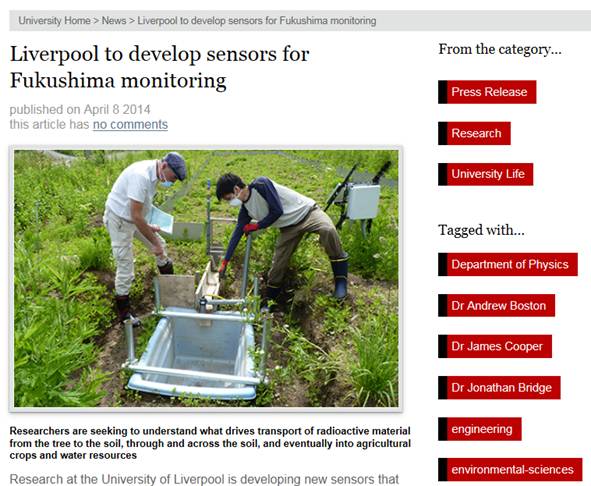
Publication just out in Nature’s Scientific Reports journal. Work led by Dr Achim Schmalenberger (now at University of Limerick in Ireland) dating from my time at Sheffield working on the NERC Weathering Science Consortium. A relatively minor contribution by myself to this paper but pleased to see this exciting research out.
Author: Jon Bridge
New article on The Conversation
What did the Romans ever do for us? They left a water warning
By Jonathan Bridge, University of Liverpool
As all good Monty Python fans know, water technologies feature large in the legacy of benefits left by Roman civilisation. But while aqueducts, sewers and baths retain an obvious presence in the landscape and in the archaeological record, the Romans’ largest and most important water achievement may have been “virtual”.
The Romans developed networks of trade and food supply that enabled them to escape local water constraints, in a way that is explained in a new study in the journal Hydrology and Earth System Sciences. Fertile regions such as southern Spain or Italy’s Po valley would grow lots of food and ship it back to Rome or to the drier outposts of the Empire.
Embedded within this is a what geographers call a virtual water trade – an indirect way of shifting this precious resource from wetter, less populated areas to those regions with more people or a less consistent climate.
The map below shows this in action. The amount of virtual water imports (a) and exports (b) in different parts of the Empire are illustrated by the size of the circles. The numbers express this in tonnes of grain. Rome is by far the largest water importer, followed by Alexandria and Memphis in Egypt, and Ephesus and Antioch in modern-day Turkey. Spain and Egypt were the biggest exporters.
All ships lead to Rome

Dermody et al
The paper’s primary author, Brian Dermody at the University of Utrecht, suggests this sophisticated water economy ultimately contributed to its own downfall as it enabled urban populations to boom beyond sustainable levels.
Does this sound uncomfortably familiar? In the next 30 years we are facing a critical combination of inter-related stresses on the core resources that keep our civilisation running. As it happens, the Romans gave us a word for that too – the “food-water-energy nexus” (from the Latin nectere, to bind together).
So are we doomed to the same fate as the Romans?
Increased energy use
As its name suggests, the nexus recognises that different resources are intimately interconnected. We need water for drinking, washing and for industry; but we also need it to grow food, and around 70% of global fresh water supply is used for farming. As populations grow and become more wealthy, demand for food will increase, placing pressure on domestic water supply and industrial output.
Economic growth and technological developments increase energy use, driving additional demand for water in power station cooling and other uses in energy generation. The rise in shale gas extraction provides a stark illustration of this: irrespective of the many other ethical and political issues surrounding fracking, it is its thirst for water (used to force the hydrocarbons out of the rocks) that may prove the key limitation. After all, 38% of the world’s shale gas resources are located in areas of extremely high water stress or arid conditions. In the UK, plans for fracking in major regions such as the Severn catchment could place untenable pressure on water use for farming and domestic supply.
In all this complexity, the mega-issue of climate change arguably plays only an aggravating role. Intensive farming is degrading soil, its primary resource base, up to 100 times faster than the rates at which it is formed. Non-renewable fuel and mineral resources are becoming increasingly scarce and more costly to recover. And renewable, drinkable water supplies are under often extreme threat.
Solving climate change will not in itself solve the problems of the food-water-energy nexus; in fact it should be apparent that our effective response to climate change is deeply entwined with a sustainable untangling of the nexus.
Interconnected threats
Like the Romans, the “modern” response to the emergent limitations of the food-water-energy nexus was economic. Global trade through the 20th century allowed us to circumvent local or regional resource limitations, stimulating unprecedented population growth along with rising wealth and living standards.
Many countries could not hope to maintain their current consumption of food and resources if they were forced become self-reliant on resources available within their territory – in the current economic and technological conditions, at least.
This makes the global economy vulnerable to regional problems. Look at this year’s escalation of tension between Russia and the West, for instance. Sanctions imposed by both sides have affected international trade in wheat and other crops, leading to supply shortages or gluts in some places and the destabilisation of farming economies and farmer incomes in others – and has raised the threat of disruption to transnational energy supplies. Again, the challenges of the nexus – and our vulnerability to those changes – transcend the background threat of climate change.
So, faced with challenges which appear strikingly similar, what can our postmodern, self-aware civilisation do to avoid the fate of the Romans? We cannot stop the nexus any more than we can prevent the climate change that will result from our current levels of greenhouse gas emission. Business as usual is clearly not an option. In the absence of a magic bullet (or something much worse, an environmental disaster or collapse), resilience is the key.
One advantage we have over the Romans is information; we can learn from precedent. We can see what is over the horizon and make a judgement on how it may impact our lives and livelihoods. The challenge, unfortunately, remains how to stimulate people and politicians to change in response to those dangers.
![]()
This article was originally published on The Conversation.
Read the original article.
Would you change the way you wee to save the world?
Another article on The Conversation (published 5/9/2014) – link to the original at the bottom of the page…
The critical links between water, sanitation, and our global consumption of energy – the “energy-water nexus” are more obvious than ever before. But how many of us will take direct action at the most basic level of all?
It turns out that the way we use the toilet has a profound impact not only on our water resources, but is implicated in global energy security and perhaps the future of industrial agriculture as we know it. Flushing a standard WC accounts for around 30% of daily domestic water consumption in developed countries. This water must then be decontaminated before it is released back to the environment – an increasingly vital process of recycling as water stress grows globally.
A mixed-up approach
Urine is usually nearly sterile and high in nitrogen, phosphorus and potassium – the triad of nutrients known as “NPK” on which intensive farming is based. Faeces are rich in organic matter and carry lots of diseases. Both are recyclable, but the modern practice of mixing them together in the waste stream necessitates expensive, energy-consuming tertiary treatment processes.
One problem is the high nutrient levels from the urine, which can lead to serious ecological impacts on receiving waters if not removed. Although some wastewater treatment plants generate energy from anaerobic digestion of the sewage itself to offset these costs, there is a strong argument for reducing or avoiding the need for the extra energy altogether.
So separating the waste at source has substantial merit. The pathogen-free urine can be reused more or less directly as a high-quality, if potentially rather smelly, fertiliser. Without the urine, treatment of the solid waste is easier, less expensive and less energy-hungry and the reduced frequency of flushing lowers stress on sewer infrastructure as well as our demand for water at source.
Reducing our need for P
Another key factor is phosphorus. As the “P” in NPK fertiliser, phosphorus supports at least 30-50% of global agricultural output but it is a finite and increasingly vulnerable mineral resource. Once mined and applied to agricultural land, what doesn’t leach into watercourses is harvested and transported around the world to our supermarkets and restaurants. A significant fraction goes to landfill as food waste, while the rest goes, via our digestive tracts, straight to sewage.
Recent estimates indicate that primary stocks of P will last at least a century. But the growing demand for food, the vulnerability of mineral commodities to market forces, and the geopolitical implications of reserves concentrated in places such as Morocco and China mean that “closing the loop” on our phosphorus use is critical to sustaining and securing food supplies into the next few decades.
Simplifying wastewater treatment by separating and capturing before it enters the sewer will play an important role in making this possible. So why aren’t we all doing it already?
Creatures of habit
The devil is in the detail, as studies by major European institutes, and increasingly public responses, have shown. Initial opinion towards “urine-diversion” (UD) toilets – which contain two pans, one for liquids, one for solids – is often strongly positive, but this changes as users have to live with the devices.

indiawaterportal, CC BY-NC-SA
In numerous settings where UD toilets have been installed in large-scale developments and public buildings, experiences are negative. Children, used to a single pan, aren’t sure “where to go”. Men in many countries don’t like sitting down to pee, and women can find it difficult to aim correctly.
All of this compromises the entire premise of the device, increases cleaning and maintenance costs, but most importantly makes people less comfortable about going to the loo.
UD toilets are common in small-scale ecohouses, often in combination with no-flush composting systems and complete independence from mains sewerage. But the users in these cases have already modified their lifestyles to accept what many others see as undesirable “hardships”. Recent reports describe an entire eco-development in China retrofitted with standard toilets after large-scale failure of a Swedish-designed UD-composting system.
The single-pan, flushing WC ranks as one of the greatest inventions of all time, just above the internal combustion engine according to a 2010 poll. It has turned the most private activity of billions from a noisome necessity to what many regard as a sanitary, peaceful few moments of calm. Like the car, the WC has shaped our modern collective psyche. But the wider negative consequences may prove to be just as profound.
Separating number ones and number twos makes sense in a sustainable vision of the future, but it may need a new masterpiece of domestic design psychology to take us there.
![]()
Jonathan Bridge does not work for, consult to, own shares in or receive funding from any company or organisation that would benefit from this article, and has no relevant affiliations.
This article was originally published on The Conversation.
Read the original article.
Article republished by The Ecologist
My article on the potential role of water in conflict and the Battle for Mosul Dam in The Conversation has been republished as a blog by The Ecologist!
From The Conversation: Battle for Mosul Dam may be evidence that a new age of water wars beckons
By Jonathan Bridge, University of Liverpool
Exactly a year ago, the world was wrestling with the possibility of another US-led military assault on an Arab state, following the horrific gas attacks in Damascus, Syria.
When US military action did come in early August this year, it was in northern Iraq against the Islamic State (IS) which evolved out of the Syrian civil war. In the context of the spiralling humanitarian crisis, swift and co-ordinated IS advances, and single acts of astonishing barbarity, ongoing US attacks have become focused on control of a dam. It is the latest and most visible chapter in the world’s growing water crisis and confirmation of water’s central role in conflicts.
The Mosul Dam blocks the Tigris River south of the Turkish border, forming a reservoir 11 billion cubic metres in volume – the fourth largest in the Middle East. Much of the military rhetoric has focused on the potential for deliberate destruction of the structure, releasing catastrophic flood waves reaching 4.6m high as far downstream as Baghdad, 350km away. But politically and economically it is the control of the dam’s hydroelectricity which gives it priority. Engineers, meanwhile, noting the reservoir’s unorthodox setting (on water-soluble karstic geology ) fear an accidental breach of the dam if vital geotechnical work, including continuous injection of impermeable grout, is not properly maintained.
Water as a weapon
Strategically, the use of the dam to determine water levels and supplies to large parts of the country makes it the largest prize in what security analysts describe as a “battle for control of water” which many observers see as defining IS’s aims in Iraq.
This plan was evident as early as June this year, following extensive flooding caused by the deliberate closure of the captured Nuaimiyah Dam west of Baghdad.
But this is not the first time water has been used as a weapon in the “Fertile Crescent” at the confluence of the Tigris and Euphrates rivers. Saddam Hussein targeted water resources during the Iran-Iraq War and his oppression of the Marsh Arabs in southern Iraq during the 1990s centred on the drainage of 6,000 km2 of wetlands, destroying a subsistence economy perhaps 10,000 years old. This was a “war by other means”, according to engineer Azzam Alwash, who won the 2013 Goldman Environmental prize for his post-2003 work to re-establish the marshlands.
The tactical use of water supplies in war dates back almost as far as civilisation itself. Limiting and depleting water supplies has been used as a siege weapon throughout history. The “Dambusters” are even part of the UK’s popular cultural memory of World War Two. But is the current zeitgeist – that this century will be marked by wars dominated by water – representative of a real or imagined threat?
Conflicting opinions
The UN was widely seen to endorsed this thesis in its 2009 World Water Development Report. Shortly after, an opinion article in the journal Nature roundly rejected it, claiming instead that “inequitable access to water resources is a result of…broader conflict and power dynamics: it does not itself cause war” and concluding that wars over water are a myth which distract from a globally progressive approach to co-operation in water management. So which position is correct?
Mark Zeitoun, an expert on Middle East water politics, has developed a theory of “hydro-hegemony” in which control over water supplies is an intrinsic component of unequal power relationships. This is perhaps nowhere better illustrated than in relations between Israel and its neighbours which shift constantly and all-too-visibly from armed to unarmed conflicts, encompassing unilateral annexation of both land and water resources as well as uneasy bilateral agreements.
In this view, water is an integral component of all kinds of conflict, from cultural antagonism to military aggression. It follows that as global demand for water grows and areas already experiencing water stress suffer further under predicted climate change, then the importance of water in tensions at all scales will grow proportionally.
A fundamental human need
Water is at the heart of many conflicts worldwide, whether between nations such as Egypt and Ethiopia, where diplomatic tensions are high regarding the construction of the massive Grand Renaissance Dam on the Nile; between developing world communities and multinational corporations, for example Coca-cola in India; or between regions within countries, such as in the western US where various states are in legal battles over the Rio Grande.
We should remain confident that the strong frameworks of national and international law will continue to confine many of these conflicts to council chambers and diplomatic conferences. However, where these mechanisms break down then a shift on the spectrum of conflict towards violent confrontations, shaped by our fundamental human need for water, does seem possible if not inevitable. In the past months in northern Iraq, from an escalating Syrian crisis in which water stress likely played a destabilising part, we may have seen the first shots fired.
![]()
Jonathan Bridge does not work for, consult to, own shares in or receive funding from any company or organisation that would benefit from this article, and has no relevant affiliations.
This article was originally published on The Conversation. Read the original article.
It’s public attitudes to recycled sewage that need better treatment, not the water
This article originally appeared on The Conversation in August 2014.
The amount of water at the Earth’s surface is pretty constant, but in many parts of the developed world we are running out of the right sort of water, and our ability to access it. The severe water shortages experienced in California and the southwestern US, in Australia, and even parts of the UK show we need new methods for ensuring a clean water supply.
One is to produce high quality water from wastewater, something that is improving all the time. While this could help relieve the strain on water supplies, public attitudes to the idea of using water that is recycled from sewage and other wastewater streams for drinking and domestic use is the more significant barrier.
The treatment and reuse of “grey” water (waste from baths, showers, washing machines and so on) for non-drinking uses such as irrigation is already widespread. But as the demand for water grows and supplies continue to dwindle, more and more attention is being paid to “black” water – in simple terms, sewage.
Technological advances and environmental regulations have made the production of very high quality water from black wastewater streams not just feasible, but increasingly an economic and political necessity. The challenge facing water engineers now is arguably just as significant: convincing the public to accept sewage water recycled in this way for mainstream domestic consumption.
Public attitudes as hard as the water
Let’s be clear. Untreated sewage is dangerous stuff, responsible throughout history (and all-too-often still today for many communities worldwide) for more deaths, disease and misery than pretty much any other single cause.
Industrial wastewater treatment is rightly considered one of the wonders of the modern world. Customers of modern water utilities companies expect reliable, high-quality water supply and removal as a given, to the extent that the majority have no idea where their water comes from, or goes to.
In practice, of course, wastewater discharged into the environment from one community has long become the source water for another community downstream – think Oxford, to Reading, to London in a chain along the river Thames. Urban myths about the number of people who have already tasted a Londoner’s tap water are deeply ingrained and somehow accepted. But when asked directly about the acceptability of recycled wastewater as a direct feed into potable supplies, attitudes harden.
In an Oregon State University survey in 2008, while a majority supported a specific water recycling proposal in principle, the percentage of people strongly agreeing with potential applications dropped to as low as 13% for uses associated with human contact or consumption, from around 55% for other industrial and municipal uses.
In a 2013 poll for The Guardian newspaper, 63% of respondents claimed they would drink recycled sewage water, but the context was broader and the question more hypothetical than in the Oregon study.
This psychological factor is important: like the fly in your soup, we are put off when a problem is placed close at hand. The key is to add steps in the process – discharging treated wastewater to the river before abstracting it again for drinking.
A 2012 Southern Water study suggests this approach would be acceptable, if the quality could be guaranteed. Recent evidence on the prevalence of antibiotic-resistant microbes in treatment plants highlights the need for ongoing technical development to combat emerging threats to health and environment. Other concerns lie around persistent organic pollutants such as pharmaceuticals, which may be concentrated by repeated recycling of black wastewater.
In striving to introduce recycled water systems, water engineers face the challenge of tackling real and perceived threats to water quality, mistrust of commercial utilities and government authorities, and a deep-rooted fear of contaminated water.
Ironically, climate change could be part of the answer. Wichita Falls, Texas, became in July 2014 the first place in the world to implement 50:50 mixing of directly recycled wastewater in domestic supplies. Residents are largely philosophical about their “potty water”, but then they’re experiencing the worst drought in 70 years with extreme restrictions on water use. In Wichita Falls, it’s state politicians and regulators rather than consumers that are the largest hurdles the scheme must jump.
Solutions from experience
Water resource managers occupy a shifting landscape between technological capability, political precaution, and public attitudes which can swing strongly and quickly. Navigating this difficult terrain while introducing engineering answers that work is complex, but the evidence suggests that trust is key to public acceptance.
In California, Israel, Australia and Singapore, environmental concerns, price incentives, fines and even national security have been used to convince people of the need to adopt wastewater recycling. Information campaigns, celebrity endorsements, aggressive branding and collaboration with trusted independent organisations are designed to reduce the yuck factor.
In the final analysis however, necessity and urgency are the most effective levers of opinion, as Wichita Falls appears to prove. Perhaps the real challenge for water engineers is to find a way to secure the infrastructure for resilient, sustainable water supplies almost behind the scenes, ready to press the button when circumstances drive public and politicians to accept the unacceptable.
![]()
Jonathan Bridge has received funding from the Natural Environment Research Council and the Technology Strategy Board for work related to human health risks from waterborne pathogens.
This article was originally published on The Conversation.
Read the original article.
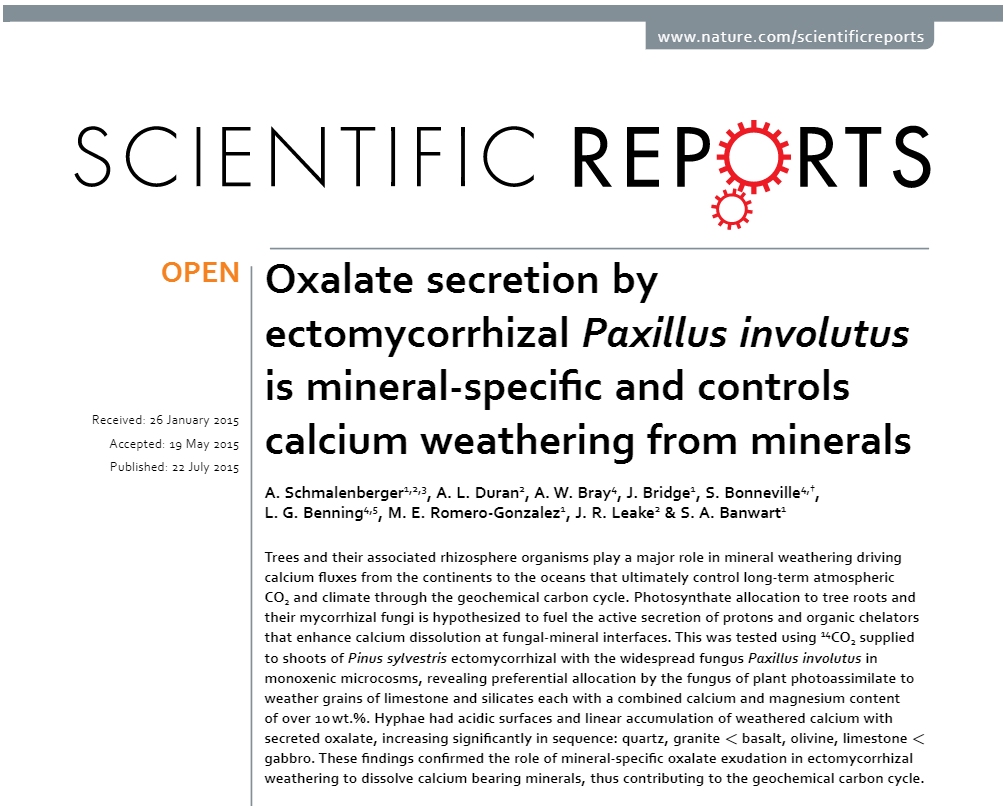
The Liverpool View: Why are Fukushima engineers creating walls of ice under a contaminated nuclear plant?
This article by me was originally published at The Conversation and reposted by the University of Liverpool.
Why are Fukushima engineers creating walls of ice under a contaminated nuclear plant?
By Jonathan Bridge, University of Liverpool
Engineers at Fukushima nuclear power plant have been trying to create a £185m ice wall to isolate contaminated water from mixing with groundwater. However, there has been a steady stream of news articles reporting on problems associated with the work so far. They are simply adding to the sense of despair and distrust that has hung over the clean-up operation since the disaster occurred at the site more than three years ago. However, a closer look at the technology inspires hope.
Strong foundations
Artificial ground freezing (AGF) is not as crazy as it might sound. It is a technique that has been used in civil engineering for more than a century. Invented by German engineer FH Poetsch in the 1880s for use in the mining industry, the principle of the process has not changed since then.
The idea is to pipe brine solution (extremely salty water) at –30°C to extract heat from the under the surface, and to cause the water in cracks and pores to freeze. The ice binds the rock and soil grains together in a sheet up to several metres thick, while also preventing the movement of unfrozen water through the ground.
At Fukushima, they will insert 1,550 pipes that go 33 metres deep. In the last month 100 pipes have been put in place, and testing has begun.
The freezing of the ground has two effects – improved strength and reduced permeability – which make AGF a useful solution to a range of civil engineering problems. As well as stabilising shafts and preventing water from entering working areas in mines, AGF is widely used in construction of dams and tunnels, where water can make the excavation impossible.
Two of the largest, most complex infrastructure projects in the US in recent years – the “Big Dig”, tunnelling an interstate beneath downtown Boston, and the New York East Side Access project which involves boring a new rail tunnel beneath already-buried road and rail networks – have used AGF extensively. It has also been one of the standard options on the table for engineers on London’s £15 billion Crossrail project.
In all these cases, ice-wall technology holds advantages over other methods. It is completely reversible with minimal environmental footprint. It can accommodate a wide range of soil formations and structures, critically giving it the ability to operate in sites which already harbour buried structures and services, such as at Fukushima.
Complex, but not sci-fi
Despite the long history of ice-wall technology in civil engineering, every project is different and subsurface environments are notoriously complex. Things can, and do, go wrong. Nevertheless, the key risk factors are well known. Poor design and maintenance of the refrigeration system is a predictable hazard, manageable through strong project leadership and use of well-informed AGF specialists in both the specification and implementation phases.
Less predictable is the effect of groundwater flow, which is a critical factor at Fukushima since groundwater management is the primary objective of building an ice wall there. Moving water freezes less easily than stationary water, and when it does it is not easy to predict how it would do so. Improvements in computer simulation of freezing behaviour in porous media and in modelling the complexity of subsurface environments are key.
So the scale of the challenges faced by the ice-wall engineers at Fukushima are huge. But they are not unprecedented. Ground freezing has even been used for radiation mitigation before, for example at mining operations in Canada and Australia where radioactive radon gas is a threat to the health and safety of mineworkers. The idea of using ice-wall technology to isolate and treat a volume of contaminated groundwater – exactly the objective at Fukushima – is based on patents outlining the concept of an underground ice-walled storage volume dating back to the 1960s.
None of this diminishes the magnitude of the problems facing engineers and managers at the world’s highest-profile contaminated site. But the ice-wall technology itself is not the bizarre stunt that has sometimes been portrayed. It might even work.
Next, read this: What is the ‘acceptable risk’ when planning a nuclear power plant?
![]()
Jonathan Bridge receives funding from the Natural Environmental Research Council and the Technology Strategy Board. He consults to the UK National Nuclear Laboratory.
This article was originally published on The Conversation.
Read the original article.
Esra’a Tarawneh poster prize
Delighted to hear that my PhD student Esra’a was among the prize winners for the Liverpool PGR Poster Day 2014 last week (http://news.liv.ac.uk.ezproxy.liv.ac.uk/2014/04/11/poster-day-2014-winners/) . Great work Esra’a, it is an exciting and I think important project on providing better information for catchment water management in Jordan that deserves recognition!
NERC project start-up makes University news
The NERC Technology Proof-of-Concept grant to develop an environmental Compton sensor started up a couple of weeks ago and a press release just went out today (8th April 2014). It is a neat account. Jamie Dormand has started work on the project with a set of simulations using the Geant software to probe a variety of scenarios and establish different feasible detector set-ups.
NERC Technologies Proof of Concept grant success
I was notified today that my first significant UK research council funding application has been successful.
This is great news as it means that from March 2014 I will be leading a £155,000 project to develop a new type of gamma radiation imaging sensor for use in environmental applications.
This is a nice extension of my research strand in imaging contaminants in porous media, but it also consolidated the work I have done in the last year to build collaborative relationships with colleagues in Physics and Environmental Sciences here at Liverpool.
We have a perfect PDRA lined up and ready to go so I’m really looking forward to this one.