Lecturer in Adaptation to Environmental Change, Liverpool

I’m delighted to be able to report that I have accepted a position as Lecturer in the School of Engineering, Centre for Engineering Sustainability, at the University of Liverpool. The position is in the field of Adaptation to Environmental Change and a key part of the role will be to contribute to the establishment of a joint
Engineering-Environmental Sciences Centre for Environmental Change Adaptation and Mitigation (CECAM).

The post, my first permanent academic position, is an exciting and challenging opportunity to make a strong contribution to research and teaching at the interface of engineering and the natural world. This is a two-way street – there are critical questions relating not only to the impacts of our current technology on environmental systems, but also around how a better, more robust understanding of complex environmental systems can inform more efficient, less wasteful and more sustainable technologies for the future.

I take up my post on 20th August 2012, leaving the University of Sheffield after 9 stimulating and rewarding years.

Field study day for Level 2 course at TILL

Saturday, 24th March saw an intrepid band of students on the Field ID and Recording Practice course at The Institute for Lifelong Learning, Sheffield head out into the field to learn key principles of geological fieldwork.

The morning was thick with fog as I led them to some detailed sedimentary geology recording at an outcrop of Rough Rock sandstone at Whirlowdale Brook, west of Sheffield. By the time we arrived at Burbage in the eastern Peak District the sun broke through and a warm afternoon saw investigation of a little-visited site, Callow Bank, where the effects of interbedded sandstones and mudstones on hydrology, springlines and geomorphology was clearly in evidence. Having made our survey there, we then traversed back over into Burbage and, using our knowledge of the elevation of the springline at Callow, successfully detected the ‘other side’ of the water table in the Burbage Valley.

For me, a fantastic first experience leading a field day and thanks to all the students on ACE2335 for making it so.

£25K SEED Fund kicked off

As part of my work with the Engineering Researcher Society, I conceived and developed an initiative to support post-doctoral and contract researchers in engineering to develop and enhance their enterprise and commercialisation skills.

The Sheffield Engineering Enterprise Development (SEED) Fund gives participants a total of £2,500 over a 20-week period. £1,750 of this is used to ‘buy out’ time from their primary research grant, giving them around ten days’ worth of time to devote to developing their skills and ideas around enterprise. The remaining £750 gives them a budget to support engagement in activities such as networking, training courses, contact meetings and shadow placements in industry.

Proposed in co-operation with other members of the ERS, Sheffield Research & Innovation Services, and the Sheffield Engineering Gateway, we successfully secured funds for 10 SEED projects, totalling £25,000, from the Sheffield Research Enterprise and Innovation Fund (REIF). The first round of three SEED projects kicked off at a meeting on 26th April, and will run until mid-September.

Communications Officer, Engineering Researcher Society

On 24th November I was elected Communications Officer of the Engineering Researcher Society in the Faculty of Engineering at the University of Sheffield. ERS is the professional society for early career, post-doctoral and contract research staff in the Faculty and exists to promote their interests, support and develop a vibrant research community, facilitating training and career development opportunities in this under-represented group.

This is an exciting opportunity – after a year of excellent growth, the ERS is seeking to consolidate its position within the Faculty. My role will be to ensure that the ERS is embedded in the life of the Faculty, connects effectively with other researcher support bodies across the University, and reaches out to researchers past, present and future to promote the support it can offer to those seeking rewarding, valuable and valued careers in Engineering research.

Teaching at The Institute for Lifelong Learning

From October 2011 to April 2012, I will be teaching the geology components of the Evolution and Life on Earth module in Natural Sciences at The Institute of Lifelong Learning (TILL) at The University of Sheffield.

The subjects covered include the fossil record, problems with the fossil record, plate tectonics and catastrophes – getting right back to my earth sciences roots! Its going to be a great opportunity to get Higher Education teaching experience in an environment that I really respect, having completed my MSc Environmental Science part-time at Birkbeck, University of London.

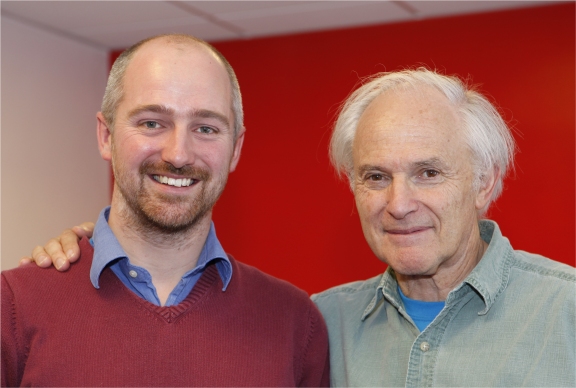
Meeting Sir Harry Kroto

The Kroto Research Institute, where I am based, is named in honour of the Nobel Laureate Sir Harry Kroto, who together with several collaborators discovered the molecule C60, buckminster fullerene (or the ‘buckyball’). This was a key milestone in the development of nanotechnology, the applied science of nanoscale materials.

As one of the researchers participating in the GEO (Global Educational Outreach) programme, which Kroto champions, I was invited to meet him at a lunch reception which took place as part of his annual visit to the institute in June. Other activities included a question and answer forum, a poster session, a workshop for early career researchers, and an outreach session involving 60 local schoolchildren, at which I helped out.

NANO-FX: ECR grant awards featured in TUOS staff newsletter

A story covering the award of my NANO-FX project, as one of only 8 Early Career Researcher grants awarded by The University of Sheffield in 2011, was published in the university’s staff newsletter. There I am, second from left in the photo. The group includes the Vice-Chancellor of the university, the PVCs for Science and Engineering, the other recipients and the designer Sebastian Conran (standing to my left). There is also a link to the brief ‘lay’ summary of the project which is posted on the university’s KTA webpages.

I’ll start work on the NANO-FX project in October 2011.

Hidden Science

© Science Council 2011 All Rights Reserved

I have joined two new Science Council initiatives to promote wider understanding of the diversity and influence of science throughout the UK. Through an Orange ‘Do Some Good’ mobile app, school students (or anyone) can ask questions on science subjects and get them answered by practising scientists – I’m now one of the scientists! I also have a personal profile on the site, here.

Linked to this, the Hidden Science Map allows people involved in using, teaching, learning or creating science and technology in the UK can mark their location, revealing the hidden landscape of UK science! Find me in Sheffield…